Using AI to Improve RAMS: 7 Practical Approaches
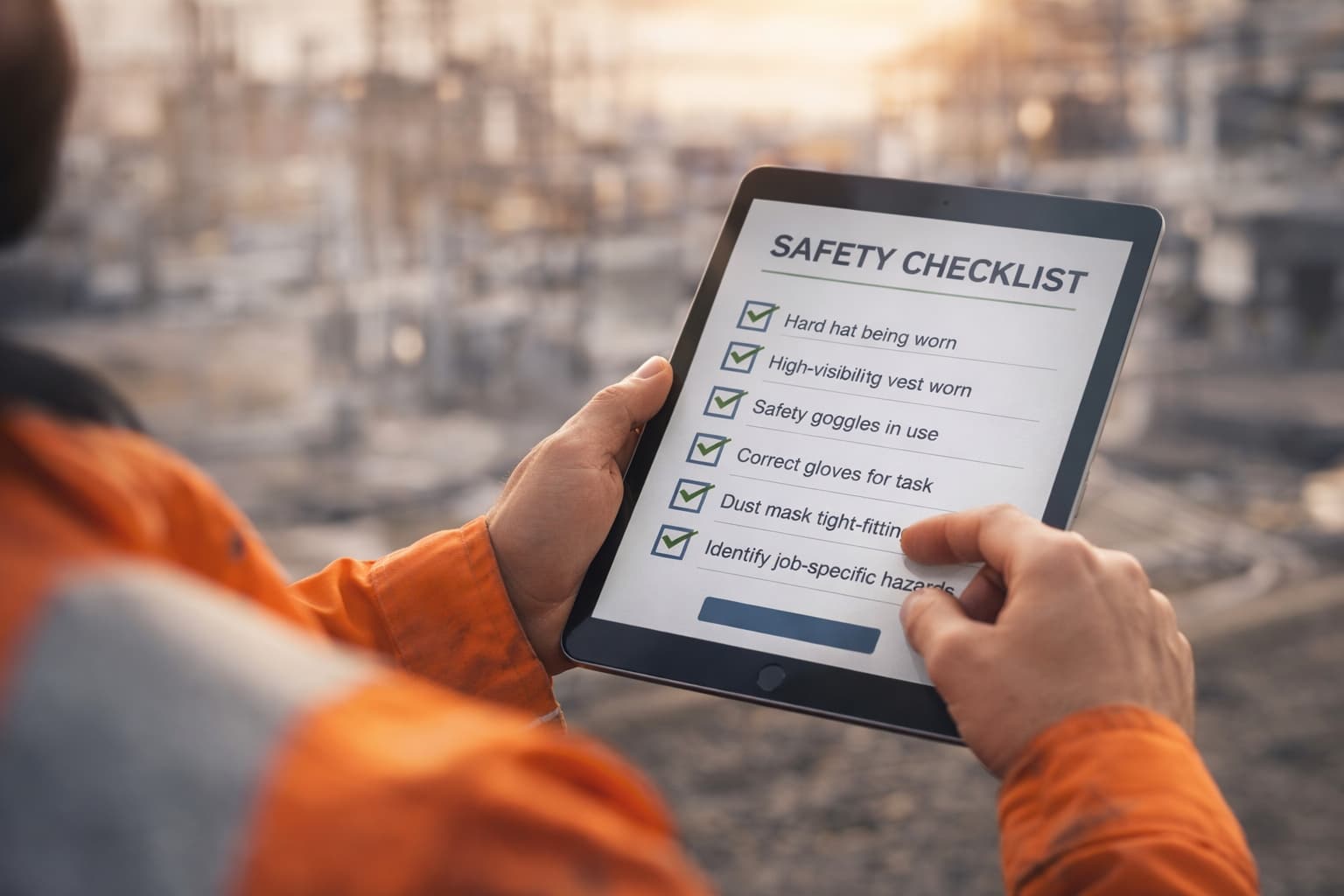
Creating Risk Assessments and Method Statements (RAMS) is essential for safe work on site - but let's be honest, the process can be a grind.
Most teams we speak to are still working from the same approach: copy a previous RAMS, find-and-replace the site details, manually update the risk assessments, chase approvals over email, and hope nothing gets missed between versions. It works - until it doesn't. And as project volumes increase and client expectations tighten, the cracks start to show quickly.
The good news is that AI tools can genuinely help. Not by replacing safety professionals, but by taking the repetitive grunt work off their plate so they can focus on the bits that actually require expertise.
Here are seven practical ways you can start using AI to improve your RAMS process today, with real examples you can try yourself.
1. Start with a structured draft, not a blank page
The hardest part of any RAMS is often just getting started. Staring at a blank document (or worse, an outdated template from three projects ago) wastes time and invites errors.
Try giving an AI tool like ChatGPT or Claude a prompt along these lines:
"I'm writing a RAMS for a confined space entry job at a wastewater treatment works. The work involves removal and replacement of a penstock valve at 4m depth. Generate a structured outline covering scope of works, key hazards, control measures, rescue plan, and PPE requirements."
You'll get a reasonable first draft in seconds. It won't be perfect but it gives you a skeleton to work from rather than starting cold. You can then layer in your site-specific details, client requirements, and professional judgement.
Tip: The more specific your prompt, the better the output. Include the job type, location context, depth or height, known hazards, and any client-specific standards you need to reference.
2. Build reusable prompts for common job types
If your team does the same types of work regularly - confined space rescue, working at height, hot works - you can create a library of detailed prompts that generate consistent starting points every time.
For example, you might build a standard prompt for confined space RAMS that always includes:
- Gas monitoring requirements
- Confined space classification under Water UK OGN 2019 guidance
- Standard rescue plan structure
- Required PPE and equipment
Save these prompts somewhere your team can access them. Over time, you're essentially building a knowledge base that captures your organisation's standards and makes them repeatable.
3. Use AI to cross-check your risk assessments
One of the most useful applications is asking AI to review a risk assessment you've already drafted. Paste in your hazard list and control measures and ask:
"Review this risk assessment for a confined space entry at a wastewater pumping station. Are there any common hazards I've missed? Are the control measures appropriate and sufficient?"
AI tools are surprisingly good at spotting gaps - a missing hazard you hadn't considered, a control measure that doesn't quite match the risk, or an inconsistency between sections. Think of it as a second pair of eyes before your document goes to review.
Important caveat: AI doesn't know your specific site. It can flag common oversights based on general knowledge, but it cannot replace a site-specific assessment carried out by a competent person. Always treat AI suggestions as prompts for your own professional review, not as definitive answers.
4. Speed up method statement writing with voice-to-text
If your engineers are better at explaining a procedure than writing one, AI can bridge that gap. Tools like ChatGPT's voice mode, or even your phone's built-in dictation fed into an AI tool, can turn a spoken walkthrough into a structured method statement.
Try this: have your engineer talk through the job step by step as if they were briefing a colleague. Record it or dictate it, then ask the AI to:
"Convert the following spoken description into a structured method statement with numbered steps, incorporating relevant safety controls at each stage."
The result will need editing, but you'll have gone from nothing to a workable draft in minutes rather than hours. This is particularly useful for complex or unusual jobs where there's no existing template to copy from.
5. Keep your equipment and references consistent
One of the most tedious parts of RAMS authoring is getting equipment tables right - making sure every piece of kit references the correct standard, that nothing's been missed, and that the list matches what's actually going on the van.
You can use AI to help here too. Maintain a simple spreadsheet or list of your approved equipment with references and ask AI to generate formatted equipment tables for inclusion in your RAMS appendices based on job type.
It's not glamorous, but it eliminates one of the most common sources of errors and inconsistencies in RAMS documents.
6. Manage version control and amendments more clearly
RAMS that go through multiple revision cycles can quickly become a mess. Which version did the client see? What changed between v2 and v3? Who approved what?
While AI won't solve your version control problem on its own, it can help you maintain clearer amendment logs. After making changes to a RAMS, paste both versions into an AI tool and ask it to summarise the differences. This gives you a clean, readable amendment record rather than relying on Track Changes in a Word document that's been through six pairs of hands.
For teams managing high volumes of RAMS across multiple clients and sites, this kind of discipline makes a significant difference - both for compliance and for your own sanity during audits.
7. Keep people in control - always
This is the most important point on the list, and it's worth being direct about it.
AI is a tool. A useful one, increasingly a powerful one, but a tool nonetheless. It doesn't understand your site. It hasn't walked the access route, assessed the ground conditions, or met the client's safety advisor. It can hallucinate references, invent standards that don't exist, and produce confident-sounding nonsense if you're not checking its work.
The value of AI in RAMS isn't that it replaces competent people - it's that it frees competent people from the admin that slows them down, so they can spend more time on the judgement calls that actually keep workers safe.
Every AI-generated output should be reviewed, refined, and approved by someone who knows what they're looking at. No exceptions.
Where this starts to get really powerful
The approaches above will help any team produce better RAMS more efficiently. But they do come with limitations. You're still copying and pasting between tools, manually managing prompts, chasing approvals over email, and hoping everyone's working from the same version.
The real step-change comes when AI isn't bolted on as a separate tool but is embedded directly into your workflow - where site data captured in the field feeds automatically into the right sections, where equipment libraries and references are maintained centrally, and where version control, approvals, and audit trails are built into the process rather than managed alongside it.
That's exactly what we've built at Shocking Energy.
Our platform, JobWay.AI, brings together everything described in this article - AI-assisted drafting, structured data capture, reusable template libraries, guided evidence collection, and controlled approval workflows - into a single system purpose-built for regulated field work.
We didn't build this in a vacuum. We've spent years working with field service businesses across the energy sector, from metering operations through to renewable installations and confined space rescue. Our RAMS capability has been developed in close collaboration with organisations who operate in some of the most demanding confined space and rescue environments in the UK. That hands-on experience shapes everything we build - we understand what matters on site because we've been building tools for people who work on sites.
The result is a platform where teams can capture site data once - through guided worksheets, photo documentation, and voice-to-text - and generate compliant, branded RAMS in minutes, with full version history, audit trails, and a clear approval workflow from draft through to client sign-off.
No more copying Word documents. No more chasing email threads for approvals. No more wondering which version the client actually signed.
The takeaway
AI is already changing how RAMS are created. You don't need to wait for a perfect solution to start benefiting - the seven approaches above can improve your process this week using tools you already have access to.
But if you're managing RAMS at any kind of volume, or working in regulated environments where traceability and compliance really matter, it's worth thinking about how AI fits into a broader workflow - not just as a drafting assistant, but as part of an end-to-end system that captures, assembles, approves, and archives your documentation properly.
If you'd like to see what that looks like in practice, book a demo and we'll walk you through it.

Share this article
Related Articles
.png&w=3840&q=75)
From Delays to Growth: How SIP Transformed L&B Electrical’s Operations
See how L&B Electrical used SIP Accreditation and JobWay to reduce third-party delays, improve scheduling and unlock new work across renewable installations.

The New Standard for Electrical Safety: From Compliance to Proof
Electrical safety is moving from assumed compliance to demonstrable proof. See how connected workflows, digital evidence and JobWay help contractors create clear, audit-ready safety records.

Why Unsafe Fuse Pulling Is Becoming a Growing Problem in Renewables
Unsafe fuse pulling is still happening across the renewables sector. As installation volumes grow, Shocking Energy’s Install Isolator Network gives businesses a safer, compliant way to access verified SIP accredited installers across the UK.